

The Indian Festival I Wait for the Entire Year: Chhath Puja
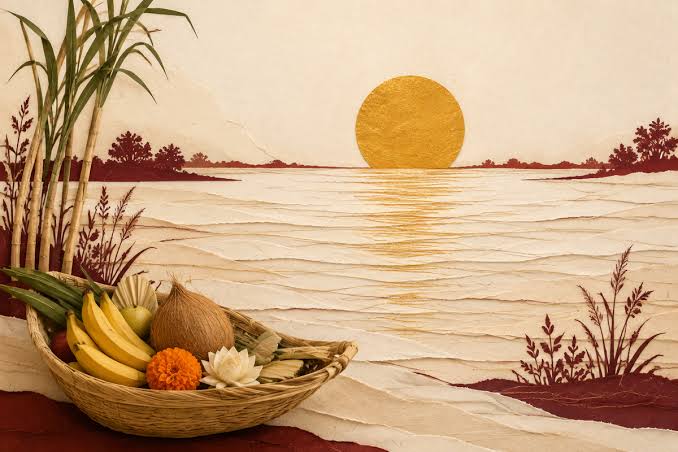
Some festivals fill our homes with lights. Some fill our hearts with colours. And then there is Chhath Puja, which teaches us to be grateful simply for being alive. Chhath Puja has been a part of my life for as long as I can remember. It's been in me since birth.
Every year, with Chhath approaching, I experience the same kind of excitement, warmth, and happiness that I've associated with it since childhood. I love celebrations in India, in any form. I love the vibrancy, lights, colors, food, music, laughter, joy, and togetherness that every festival brings with it. But there's one celebration that I wait for all year long, and it's not because it's louder, grander, or more extravagant than the rest. In fact, it's the complete opposite. Chhath Puja is a festival of silence and simplicity that doesn't require any fanfare to make it special.
It holds a unique place in my heart because of its ability to bring people together in a manner that other festivals don't demand or require people to do. Perhaps that's what draws me to it so much. We live in a world where everything is questioned, argued, debated, and dissected until it loses its meaning. And that's exactly how we treat our traditions. I think questioning traditions is important. Not everything that came before us must continue to stay the same. But I also think we must attempt to understand them before questioning their relevance.
One of those debates I constantly see revolves around fasting. Why do we do it? What's the point? Is it even necessary? And when we do it, is it not just for the sake of our husbands or children?
Sometimes I think people forget that there are different perspectives on everything. Chhath Puja has always allowed me to see fasting from a different angle. The kind of fast observed by Chhathias requires immense patience and dedication. I believe it to be a deeply personal ritual that transcends gender. While we often hear men criticized for their perceived privilege, their participation in the vrat is entirely voluntary like women. I think it's beautiful that both genders can choose to do so on their own free will without judgment. There isn't a single reason that explains why every Chhathi Maiya's daughter observes this vrat because the reasons are deeply personal to each one of them. Some do so with the hope of attaining prosperity and happiness for their families while others seek fulfillment through faith alone. But none of those reasons define or diminish anyone's experience.
Fasting can be a deeply spiritual practice for people, and I believe Chhath Puja is one of the few festivals where the faith isn't tied directly to gender. When a woman observes a fast, her faith isn't conditional upon her willingness to do so. Likewise, when a man observes a fast, his faith doesn't become any greater than a woman's. The power of a tradition, in my opinion, lies not in its longevity but in its ability to continue resonating with us long after it was created.
If there's one thing that always fascinated me about Chhath Puja, it's the fact that we worship both the setting and the rising sun. We grew up watching the sun rise and set every single day of our lives. It's such an everyday part of our existence that we barely ever think about it. We get up, get ready, run around, worry about our problems, deal with our successes and failures, celebrate, cry, and go to sleep. The sun rises again tomorrow, just as it always has. But how often do we stop and think about how incredible that really is? Chhath Puja makes us stop and appreciate the simple joys of life by making us realize how much we take them for granted. It's an act of faith that makes us understand the value of living one day at a time. The first day of Chhath involves offering arghya to the doobta hua sooraj, while the second day begins with offering arghya to the ugta hua sooraj. We bow down in front of the sun as it sets and rise to meet it as it sets on us. Think about how unique that is. We don't just worship the sun as it rises to greet us every morning. We also offer our respects to the sun as it sets, signifying the end of another day and the hope that it'll rise again tomorrow. Isn't that the whole point of Chhath Puja?
We live in a world that celebrates and glorifies so many things, but rarely are we taught to express gratitude for the ends as well as the means. In fact, when life hands us its disappointments, we're often encouraged not to dwell on them for long. We're taught to strive for success, happiness, and fulfillment in life while forgetting that failure and loss are equally a part of our existence. The sun rising every day is a joy that we rarely pause to appreciate because we're far too busy chasing happiness, success, and an ideal life. But the sun rises, sets, and rises again every day regardless of whether we're prepared for it or not. Chhath Puja teaches me to be grateful for all the little things in life. When I come to the end of a day, I offer my respects to the setting sun as a way of expressing my gratitude for another day lived and another sunrise I've witnessed. When I watch the sun rise in the morning, I realize how lucky I am to be able to see another day of my life and experience the simple joys it brings with it. But life isn't always beautiful, and neither are its disappointments fleeting. Sometimes we fall, and the world falls right along with us. We wake up in the morning only to be met with confusion, uncertainty, and doubts about who we are and what we want out of life.
But the sun still rises, and Chhath Puja teaches me to bow down in thanks for every single day of my life regardless of what it may bring with it. We worship deities, read our scriptures, follow our traditions, and find solace in faith. I think there's something deeply beautiful about that. But one of the most fascinating things about Chhath Puja, the festival I love the most, is its ability to connect us with something that powers everything around us - the sun. I realize that the sun's rays are crucial for photosynthesis and therefore for the survival of our planet's plant life, which in turn sustains all other forms of life. But I also realize that we take the sun for granted because it rises and sets every day without fail. As a result, we're often unappreciative of the beauty it brings with it. We can't even notice a beautiful sunrise without complaining about the heat of the day right after. I think that's the biggest reason Chhath Puja is so special to me. It reminds us to appreciate the beauty of everyday things we see but rarely notice. Science has a deep understanding of why the sun is important for our planet and how exactly its energy helps to support life on Earth.
But I still think there's something beautiful about the ways humans have chosen to show their gratitude for the sun over thousands of years by developing rituals, traditions, and stories around it. For me, celebrating Chhath Puja encapsulates the beauty of the human spirit perfectly, bridging the gap between science and spirituality. It reminds us of our duty to be thankful for the blessings we have and encourages us to re-evaluate our relationship with our surroundings in ways we've never done before. I believe that's the most important message it delivers to us all. I'm often overwhelmed by the kind of faith people have in Chhathi Maiya during their time of need.
I've seen people go through really tough phases in their lives when there's practically nothing they can do to change the situation. And yet, I've seen them turn to their faith and vow to observe Chhath Puja as an offering to Chhathi Maiya and the Sun God in hopes that something will change. I will never argue faith is magical or that every prayer is answered just because someone believes it to be so. But there's something deeply beautiful about the way faith comforts people during their darkest times and makes them realize that despite their struggles, they still have the strength of discipline and hope within them. Sometimes when life disappoints us and leaves us with more questions than answers, prayer is all we need to help us find solace in something bigger than ourselves. It makes people realize that they may not have control over whatever it is that happened to them, but they can control how they'll move forward from this point on. That, to me, is the most beautiful part of Chhath Puja. It's not about making people realize faith can replace practical solutions. It's about making them understand that humanity needs hope and faith to cope with some of life's toughest challenges.
That's the spiritual beauty of Chhath Puja, and I believe it's something that stays with you no matter what part of life you're going through. The way I see it, my experiences with Chhath Puja have made me deeply connected with Chhathi Maiya. It's a feeling I can hardly explain to people who don't know what this festival is all about. Perhaps that's the beauty of faith; some things about it are deeply personal and can't be fully understood by people who haven't been through the same experiences as us. Despite all the deep philosophical meanings attached to it, I think Chhath Puja is a celebration that's deeply beautiful in the small, simple ways as well. The making of thekua is one of my favorite parts of the festival. So are the rituals that go into making the prasad as well as the care and dedication that go into offering the fruits. Watching everything get distributed among family members, neighbors, and people who've helped us during the festival are truly heartening experiences. Listening to the songs, the stories, and the emotions they carry with them make me realize that I'm a part of something bigger than myself and my family. Watching people gather around the banks of rivers, ponds, and ghats to offer their prayers touches something deeply beautiful within me. So do the interactions I have with people who've come to the ghat with their family and those who've helped me during the festival. Family members preparing for the festival for days in advance and being willing to assist others are also heartwarming experiences that touch upon the true meaning of community. Everything plays a role in making Chhath Puja one of the most special festivals of the year for me in more ways than one.
It feels amazing to see it take center stage for a couple of days as people make time for it, prepare, make arrangements, and travel to be with their families. It's beautiful to see people from different backgrounds, who may not see each other on a daily basis, coming together to observe this festival and share in each other's joy. Chhath Puja reminds us of the kind of devotion that makes life worth living, and it's something I associate deeply with this particular festival. Devotion in itself has the kind of beauty that draws us toward faith, but I think the way it's celebrated during Chhath Puja is something else entirely. There isn't a single element of extravagance or luxury required for observing this festival. It's about the love and care we put into making the prasad, the fruits we offer during the rituals, the water we use to take a dip in, the rising sun that greets us every morning, and the people we're blessed to be a part of our lives. Everything adds up to create a festival that's cherished and looked forward to all year long. When the prasad is prepared and later distributed to family members, neighbors, and even people who've extended their help to us during the festival, it feels amazing to see the love and devotion it's been prepared with being shared and cherished by others. I think the devotion we express through our participation in this festival is what makes it beautiful. It connects us all, and I realize that its simplicity is what makes it so special. Isn't it ironic how the most extravagant celebrations are overshadowed by the seemingly insignificant ones? We tend to measure our festivities based on how much we spend, how grand they are, and how many people acknowledge them.
But I think some of the most beautiful ones are the ones we share with the people we love most and who love us right back. They're the kinds of celebrations where we're willing to extend our help to others and accept it when it's offered to us willingly. Those are the kinds of festivals that create lifelong memories for us, and they're deeply precious to me. Growing up around Chhath Puja has taught me countless valuable lessons while also allowing me to cherish a part of our culture that I can't imagine ever doing without. At a very young age, I've been taught the value of traditions and the way they connect us to people we may never know or meet. I've been taught that when we follow a ritual that our parents, grandparents, and ancestors have followed for years and years, we become a part of a story that began long before us and will continue long after us. We may not know the people who once practiced these traditions, and we may rarely visit the places they did so in, but we still carry on their legacy with us. We honor them by continuing to observe these time-honored practices, and that's one of the most beautiful things about Indian culture for me. Our festivals aren't just about dates and events. They're about stories, the people who carry them forward, the lives they touch, the food we prepare and share with our loved ones, and the memories we make. Chhath Puja is a festival that connects us with our culture and family in a manner few things can. But what I love most about it is how it brings people from diverse backgrounds together to participate in something that makes no distinctions. At the ghats is where one of the most beautiful things about Chhath Puja comes together beautifully.
I love watching people come together to offer their prayers as well as to assist each other. It brings us all together as a community of people united by a common goal. It makes me realize that there's no greater feeling in the world than being a part of something that connects us to so many different people at the same time. Perhaps it's something we need now more than ever. We live in a world where people are busier than ever, and it's easy for relationships to begin and end without us ever getting to know these people deeply. But Chhath Puja asks us to take a pause and spend quality time with people who matter most to us, offering them our gratitude and devotion in whatever capacity we can. It makes us realize how beautiful it is to come together and share in each other's lives in little ways, such as helping someone get their preparations done or taking a part in the rituals. It reminds us that the feeling of belonging can be found in almost every part of our lives. And that's the kind of magic Chhath Puja possesses in my opinion. If there's one question I wish people asked me, it's "why do you wait for Chhath Puja all year long?"
I could probably give them a hundred reasons. I could talk about the rituals, the fast, thekua, songs, offerings, the rising and setting sun, the happiness, and so much more. But I don't think any of those reasons would be sufficient to explain what makes Chhath Puja special to me. I think it's the festival that contains everything I love about faith and life in general. It shows us the value of gratitude without demanding anything extravagant from us. It makes us appreciate nature without making us separate ourselves from it. It lets us express our faith and devotion in whatever ways we see fit, asking for nothing but our own discipline. It makes us cherish our relationships with our family, neighbors, and community. And most importantly, it makes us learn to be grateful for the fact that we're alive every single day. Because life isn't measured in days or months. It's measured in moments, and Chhath Puja asks us to make the most of every single one of them and never take anything for granted. That's what I love most about Chhath Puja. We're constantly reminded not to take life for granted because something beautiful happens every single morning when we wake up and realize we're still alive.
The sun rises to greet us, and we offer our thanks. We realize that nothing should come between us and the blessings in our lives, and we strive to be better people every single day.
Chhath Puja reminds us of that, and I believe that's what makes it incredibly special to all of us in different ways. The setting sun is a reminder that even the most beautiful things come to an end and deserve our gratitude. The rising sun is a reminder that every new day is a blessing we must learn to cherish. Chhath Puja makes us understand that life is made up of moments that we take for granted, and I think that's something that can be understood on a deeply personal level. I don't think we need to understand faith from a theoretical point of view to be able to respect it or the ways it bring meaning to people's lives. Likewise, I don't think every tradition needs to be defended against criticism.
But I do believe some are worth understanding for longer periods of time, and I think Chhath Puja is one of them. It's a tradition that's simple but speaks volumes, and it's one of those things that I can't imagine doing without. I think I'll never stop learning about the beauty of faith and life through it, and I believe one day I'll look back at this period of my life and realize how grateful I am to have experienced it. And when the final offering has been made, when the prasad has been distributed to everyone, when all the songs have been sung to mark the end of this year-long celebration and people have returned to their everyday lives, one thing will remain constant.
I'll wait for it again because I'll have another opportunity to witness the life-changing beauty of Chhath Puja and see the value in what it brings to our lives. Perhaps that's what it's all about for us. We spend our lives asking for more out of life than what we already have, and Chhath Puja reminds us to be grateful for our lives, happiness, and the beautiful world we live in. And every year, it will remind us to look at the sun and bow our heads in gratitude for another day of life. Chhath Puja teaches me to be grateful for everything I have and for every single day of my life, and I believe that's one of the most valuable things it brings into our lives. It makes us cherish our lives, our relationships, our culture, and our traditions. And it does all that without demanding anything extravagant from us. It makes us realize that we shouldn't overlook the small things in life as well as the people who make it beautiful for us. We should never forget that life isn't just about success and happiness, but also about its challenges.
And most importantly, we should never forget to express our gratitude and devotion to all of life's blessings as often as we can. And every year, I'll look forward to doing just that while participating in this beautiful festival.